
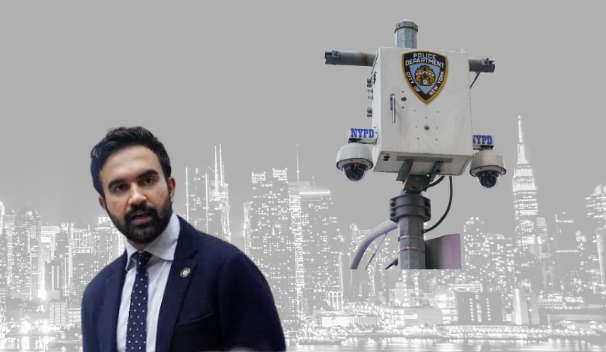
Written in response to the Nov. 30, 2025 New York Times article on Mayor-elect Zohran Mamdani and police surveillance.
By Tom Joyce
As someone who spent decades in law enforcement and the last 19 years working inside public- safety technology, the latest New York Times story about Mayor-elect Zohran Mamdani and the NYPD’s surveillance systems struck a familiar chord. It’s the recurring pattern: a rising politician rails against “police surveillance” during the campaign trail, only to discover, once elected, that keeping 8 million New Yorkers safe requires far more than slogans.
The New York Times highlighted Mamdani’s long-standing skepticism toward police technology and contrasted it with his decision to retain Commissioner Jessica Tisch, one of the primary architects behind the Domain Awareness System. That decision alone speaks volumes. Campaign rhetoric is one thing; governing the largest terror target in the world is something else entirely.
Here’s the truth from someone who has used, overseen build outs, and defended tools like license plate recognition and facial recognition: the technology itself isn’t the danger. Cameras, LPR, and public-facing sensors simply record what anyone on a street corner can see with their own eyes. The real risk lies in how the information is stored, for how long, and how it can be accessed historically. That’s where guardrails matter. Retention rules, audit logs, incident-based access, transparency, and strict limitations on how historical data can be searched… that’s the heart of the privacy debate.
Most people don’t fear being observed in public. They fear being archived.
The irony here is that Mamdani is about to experience the shift that every newly elected leader eventually confronts. Once you are responsible for violent-crime investigations, missing-child searches, threat streams, and real-time public safety, you quickly learn that you cannot police a modern city with outdated tools. These technologies are not optional. They are foundational. And Commissioner Tisch, the system’s chief architect, is not going to shrink the system she built, nor will the mayor ask her to. He can’t. The stakes are too high. If anything, the system will continue to evolve, because the threats will.
This isn’t a defense of mass surveillance. It’s a defense of balanced, responsible, accountable use of technology that helps solve crimes and prevent tragedies while respecting privacy through strong, crystal-clear rules around data use.
If the mayor-elect embraces that balance, NYC will be safer and its civil liberties better protected. If he clings to campaign-trail absolutism, he’ll quickly find himself unprepared for the realities of running a city this complex.
The Times article sets the stage. The real test begins the moment he steps into office.
Tom Joyce is a retired NYPD Lieutenant. He is co-host of Ten-Four Tavern on The
Finest Unfiltered Network